A diffuser is the obvious way to use an essential oil, and the four common types work in completely different ways. It is not the only way, though, and for a small room it is often not the best one. Everything below needs nothing you do not already own.
A drop on cloth
The simplest method there is. One drop on a handkerchief, a cotton pad, the corner of a pillowcase. The fabric holds it and lets it go slowly, so the scent stays within arm's reach instead of filling a room — closer to something you lean into than something you walk through. A drop of lavender on a pillowcase is still faintly there in the morning.
A bowl of hot water
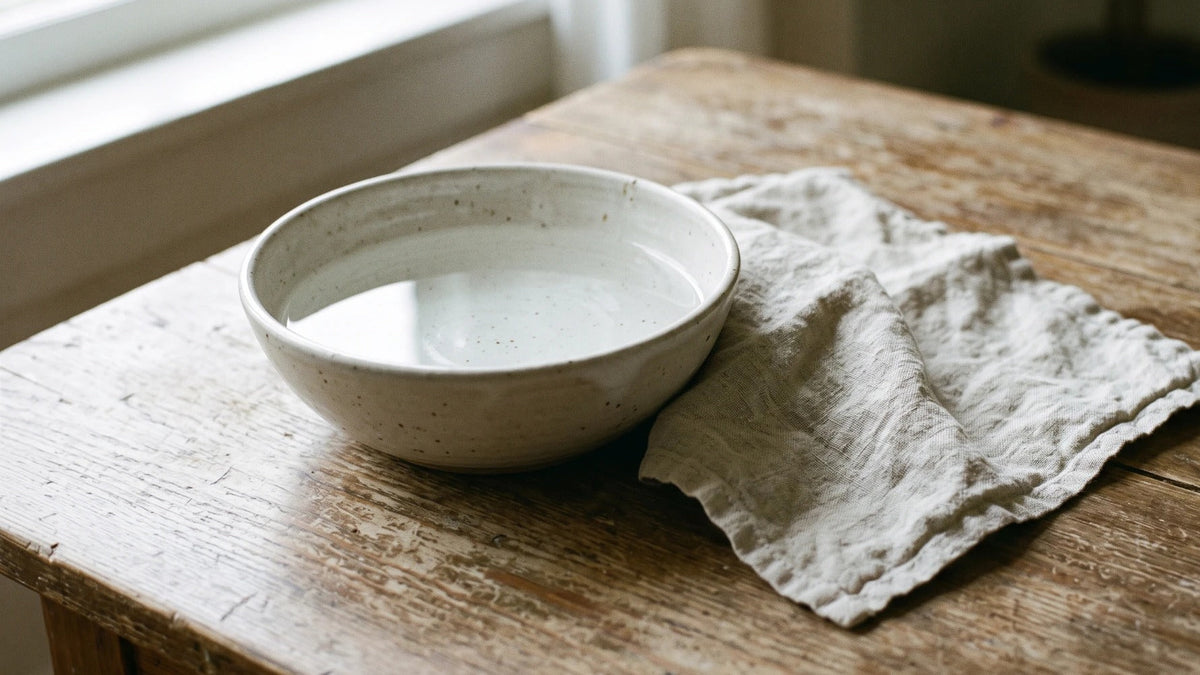
Hot water in a wide bowl, two or three drops on the surface, set on a table. The steam does the work, and it is fast — a small room changes within a minute or two. Eucalyptus is the oil that announces itself here: sharp and cold-smelling, clearing the top of your nose before you have decided whether you like it.
In a wardrobe or drawer
A few drops on a cotton pad, tucked at the back of a shelf. Enclosed spaces are where a small amount goes furthest — no draught to carry it off, nowhere for it to disperse to. Lavender suits a wardrobe particularly well: dry, faintly herbal, closer to clean linen than to flowers. Open the door a fortnight later and it is still there.
On unfinished wood or terracotta
Porous materials hold oil the way a wick holds fuel. An unglazed terracotta coaster, an unsealed wooden bead, a plain clay dish — a drop soaks in and comes back out over days, quieter each morning. Terracotta adds something of its own underneath: a dry, mineral edge, like the smell of a pot after it has been watered.
In the wash
A few drops on a wool dryer ball, or into the final rinse. What survives the cycle is faint — a suggestion rather than a perfume, noticed when you fold the load rather than from across the room.
Around a bin or a drain
A drop or two on the inside of a bin lid, or on the cardboard tube of a kitchen roll left near a drain. Unglamorous, and the place where scent does its most obvious work. Lemongrass and eucalyptus both read as clean here in a way that sweeter oils do not.
On a vacuum filter
A drop on the filter or in the bag before vacuuming. The scent moves through the room on the exhaust air for as long as the job takes, which is usually exactly as long as you want it.
On a doormat or a radiator
Underneath a doormat, where it is walked over rather than seen. Or a drop on a cold radiator before the heating comes on — the warmth lifts it slowly through the evening, and the room is different by the time anyone notices why.
On skin, diluted
Essential oils are concentrated, and the standard practice is to dilute them in a carrier oil before they touch skin — a small percentage, not neat drops. Done that way it is the most private of these methods: the scent travels with you, and nobody else in the room necessarily knows it is there.
What will damage something
The methods above are safe on the surfaces named. These are the ones that are not.
Varnished, polished or lacquered wood. Essential oils are solvents. They cloud a finish and lift a lacquer, and the mark does not come out.
Fabric you care about, undiluted. The darker, resinous oils stain. Test on a hem.
Wet clothes, directly. Neat oil spots fabric in the wash. On a dryer ball or in the final rinse instead.
A vacuum filter your manual says to keep dry.
Skin, undiluted. Patch testing a small area first is standard practice, and some oils cause reactions more readily than others. A dermatology reference will tell you more about that than a brand will.
Anywhere a bowl of hot water can be knocked over. Let it cool before you move it.
A note on quantity
Every method above uses drops, not measures. Essential oils are concentrated to a degree most people underestimate on first use, and the common mistake is generosity. Start with less than feels like enough. You can always add one more.
SoulSoil oils are cosmetic products, not medicines. Articles here are general and editorial, are not medical advice, and are not a substitute for professional care. If you have a health concern, speak to a doctor.